Tesla Wall Connector vs universal J1772 and NACS chargers
The important choice is usually not a brand name. It is the charging level, the connector your car uses, whether the unit is hardwired or plug-in, and whether it meets the utility rebate specifications if you plan to apply.
Level 2 is the common home standard
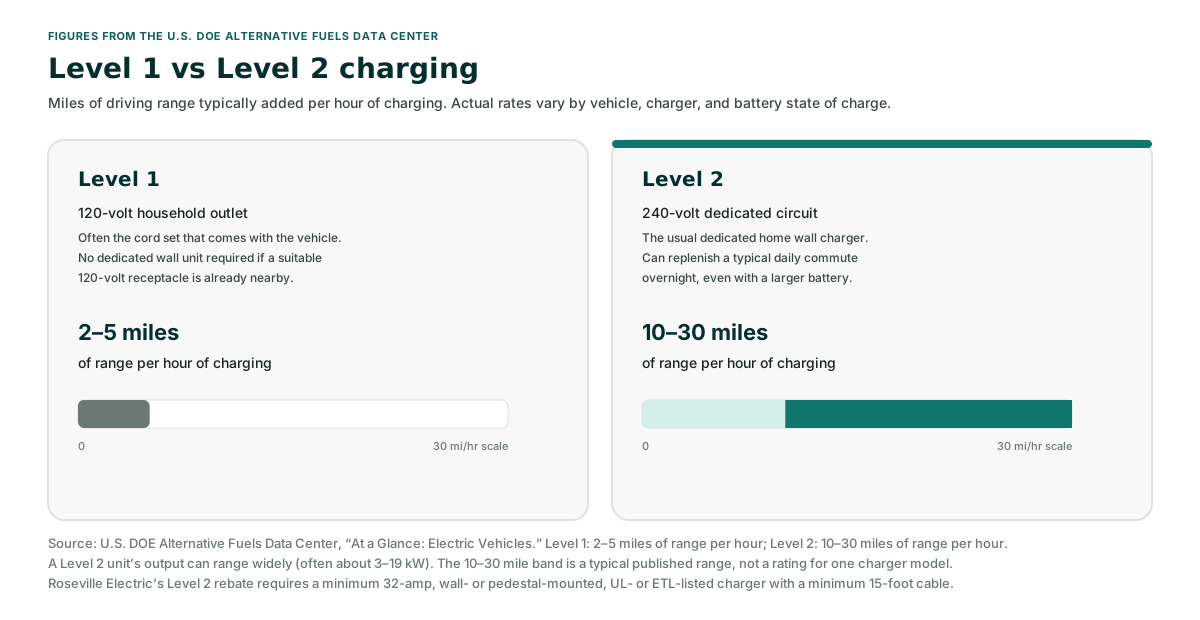
A Level 2 home charger runs on 240 volts and can replenish a typical daily commute overnight, which is why most dedicated home installations are Level 2 rather than a standard 120-volt Level 1 convenience cord. The U.S. Department of Energy’s Alternative Fuels Data Center describes Level 2 as the usual upgrade when a driver needs more than an overnight Level 1 charge, and it recommends purchasing safety-certified equipment and using a qualified electrical contractor. AFDC’s “At a Glance: Electric Vehicles” fact sheet puts typical charging rates at 2–5 miles of range per hour for Level 1 and 10–30 miles per hour for Level 2. This page does not rank products or sell hardware.
J1772, NACS, and Tesla Wall Connector
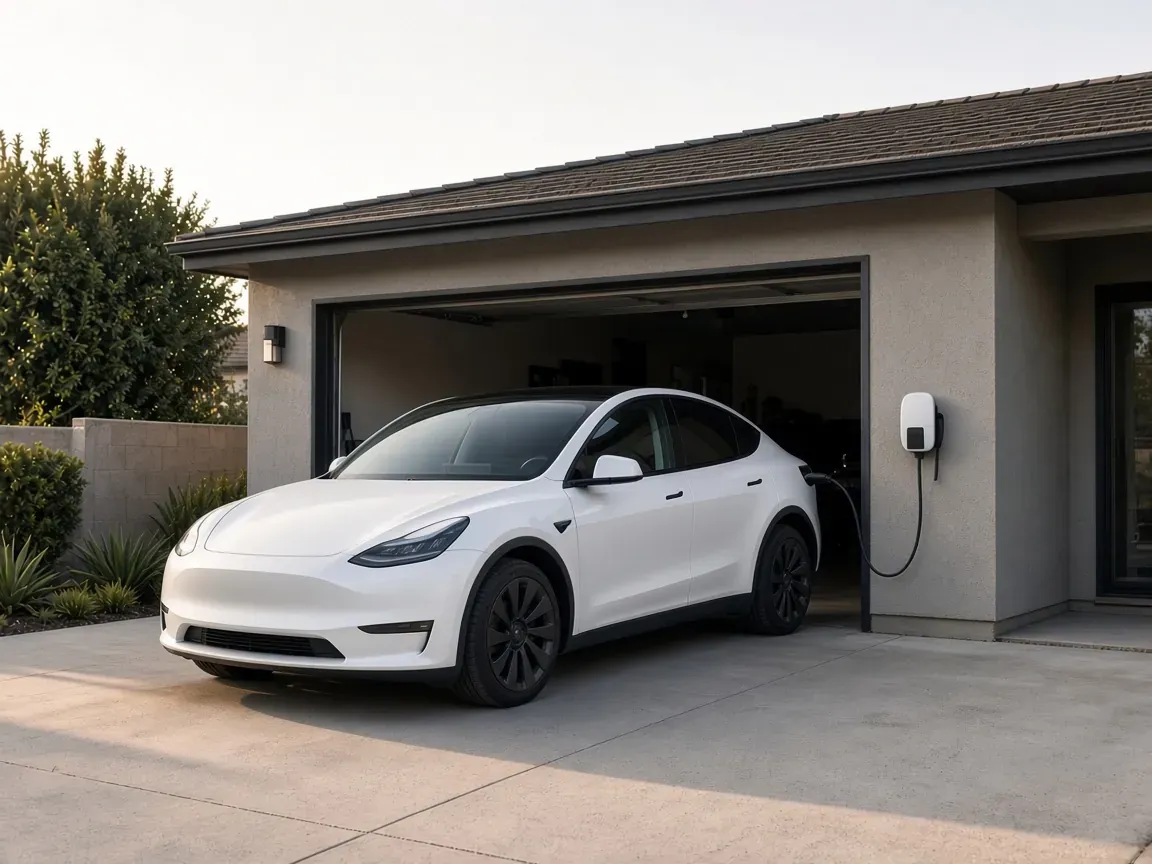
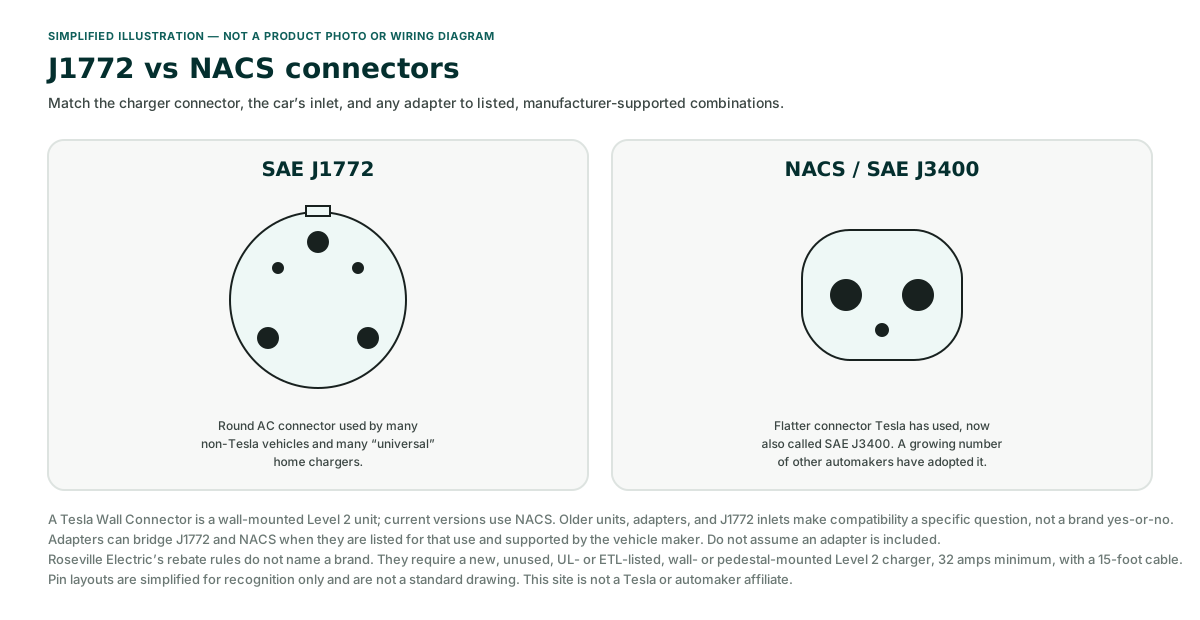
SAE J1772 is the older North American AC connector used by many non-Tesla vehicles and by a large share of “universal” home chargers. NACS (North American Charging Standard, also called SAE J3400) is the connector Tesla has used and that a growing number of other automakers have adopted. A Tesla Wall Connector is Tesla’s wall-mounted Level 2 unit; current versions are NACS. Older Wall Connectors, adapters, and non-Tesla cars that still have a J1772 inlet are why “will this charger work with my car?” is a specific question, not a yes-or-no brand question.
Adapters can bridge J1772 and NACS when they are listed for that use and supported by the vehicle maker. Do not assume an adapter is included, or that every charger and every adapter is approved for indoor or outdoor use at the amperage you want. If you have two different EVs in the household, say so on the quote request so the circuit and connector choice can account for both.
Hardwired vs a 14-50 outlet
A hardwired wall unit is mounted to a dedicated circuit with no plug. A NEMA 14-50 receptacle is the same style of 240-volt outlet used for many ranges and some RVs; a portable Level 2 charger then plugs into it. EnergySage notes that hardwired installations can look cleaner and can deliver the charger’s full listed current, while a plug-in unit is easier to take elsewhere or replace. The manufacturer’s instructions control what is allowed: some wall units are listed only for hardwired installation.
If you already have a 14-50 in the garage, do not assume it is ready for an EV. The circuit may be shared, undersized, or on a receptacle that is not in the condition an inspector will accept. An electrician should verify conductor size, breaker size, and condition before you treat it as a charging outlet.
Specs that matter for the Roseville Electric rebate
If you are a Roseville Electric customer and you intend to apply for the Level 2 rebate, the written specifications (current as of the July 2025 applications and the utility’s EV page checked November 11, 2026) are:
- New and unused
- UL Listed or ETL Listed
- Wall- or pedestal-mounted
- Minimum 32 amps
- Minimum 15-foot charging cable
A 16-amp unit, a used charger, or a portable cord that is not wall- or pedestal-mounted can miss the rebate even if it charges the car. Choose the equipment first, then have the electrician size the circuit to that unit’s rating (typically at 125% as a continuous load). Details are on the rebate guide.
Rocklin and Lincoln homeowners on PG&E should check PG&E’s eligible-equipment list for that program, which is separate and can change.
What to tell the electrician
- The vehicle make, model, and model year, and whether a second EV is expected.
- Whether you already own a charger, and its exact model.
- A preference for hardwired vs 14-50, if you have one, and whether the unit will be indoors or outdoors.
- Whether you plan to apply for a Roseville Electric or PG&E rebate, so the unit can be checked against those specs before it is purchased.
This site is not a Tesla, automaker, or electrician affiliate, and it does not receive a commission for naming any charger model.
Request a quote
A local licensed electrician can review your panel, run length, and charger choice and give you a written scope. There is no obligation to hire anyone.